The post ‘Declare health emergency’ to end hepatitis in Asia appeared first on Gavi CSO Constituency.
]]>4 min read by SciDev.Net
Countries in Asia Pacific are unlikely to meet their commitment to eliminate hepatitis by 2030 unless they declare a public health emergency, as they did with COVID-19, a disease specialist suggested.
Hepatitis – an inflammation the liver — is the second most deadly infectious disease in the world, surpassing tuberculosis and behind only COVID-19, according to the World Health Organization (WHO). It claims 3,500 lives each day.
The WHO set a target in 2016 of cutting new infections by 90 per cent and deaths by 65 per cent before 2030, as well as treating 80 per cent of people affected, in order to end the disease.
“In Pakistan, three people are dying every minute from hepatitis, and these are preventable.”
Saeed Hamid, professor and chair at the Department of Medicine, Aga Khan University, Pakistan
However, Saeed Hamid, professor and chair at the Department of Medicine at Aga Khan University, Pakistan, stressed during a 20 June forum on infectious diseases in Vietnam that, “at the current rate, most countries in the Asia Pacific will not meet the elimination target by 2030”.
Despite progress in diagnosis and the drop in prices of testing and treatment, there is still a critical gap in coverage, said Hamid, whose research focuses on hepatitis. Far too few receive treatment and for those who do, if often comes too late, he explained.
The disease is deadly because a person could be infected for years and the symptoms only emerge once the disease is in an advanced stage — which is why testing is crucial.
“We need to declare an emergency in all of the high-burden countries,” Hamid said, citing the unprecedented rapid response countries adopted with COVID-19 which demonstrated “that it can be done with political will”.
There are five main types of hepatitis virus, referred to as A, B, C, D, and E. Hepatitis A and B can be prevented with safe and effective vaccines, but there are no widely available vaccines specifically for the other types.
Have you read?
- Chad is facing a Hep E outbreak: what role could vaccines play in the response?
- Sri Lanka achieves hepatitis B control: “We are on track for elimination”
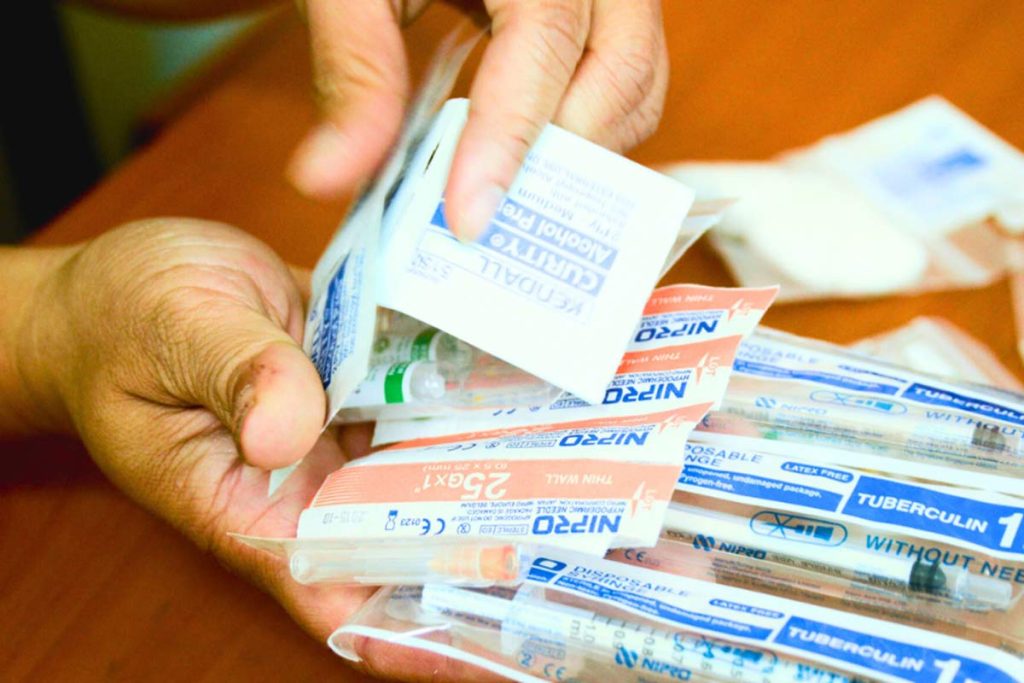
The Asia Pacific region has the greatest hepatitis burden, with Pakistan now having the world’s highest number of hepatitis C cases at 8.8 million. Here, transmission of the disease is mostly driven by healthcare-related exposure, such as poor sterilisation of medical equipment, evidence suggests.
“In Pakistan, three people are dying every minute from hepatitis, and these are preventable”, Hamid said.
John Ward, director at the Coalition for Global Hepatitis Elimination, considered this as regrettable since “we have a vaccine for hepatitis B for 40 years now. In fact, it is one of the success stories we had”.
He emphasised the need not just for testing but more critically accelerated treatment and health service support for those diagnosed with the disease. He also cited the importance of education and peer support to eliminate stigma associated with the disease, which prevents people from seeking treatment.
Ward agreed that declaring a public health emergency would “capture the attention” and cause authorities to implement an immediate response.
“However, with so many health issues and non-health concerns competing for limited resources it will be a challenge” for health experts to build national commitment towards hepatitis elimination by 2030, Ward said.
On the launch the Global Hepatitis Report 2024 in April, WHO director-general Tedros Adhanom Ghebreyesus said that every year viral hepatitis kills more than 1 million people globally and infects another 3 million, emphasising that these numbers might be underestimated.
The WHO report highlighted ten countries responsible for two-thirds of global viral hepatitis B and C burdens: China, India, Indonesia, Nigeria, Pakistan, Ethiopia, Bangladesh, Vietnam, the Philippines and Russia.
There were 304 million people living with hepatitis in 2022. Hepatitis B and C together are the most common cause of liver cirrhosis and liver cancer, which is now the third leading cancer in Asia Pacific.
Hamid highlighted the success of Egypt in combating the disease. The country used to have the highest hepatitis C burden but saw a dramatic drop following its 100 Million Healthy Lives campaign.
Egypt tested over 60 million people and treated more than 4 million people, resulting in a drop of new infections from 300 per 100,000 in 2014 to 9 per 100,000 in 2022. The goal for hepatitis C elimination is less than 5 per 100,000 new cases per year.
Pakistan is aiming to replicate Egypt’s achievement with a massive hepatitis health campaign currently underway, Hamid said.
Website
This article was originally published by SciDev.Net
- Read the original article.
The post ‘Declare health emergency’ to end hepatitis in Asia appeared first on Gavi CSO Constituency.
]]>The post In world first, Nigeria introduces new 5-in-1 vaccine against meningitis appeared first on Gavi CSO Constituency.
]]>In a historic move, Nigeria has become the first country in the world to roll out a new vaccine (called Men5CV) recommended by the World Health Organization (WHO), which protects people against five strains of the Meningococcuss bacteria. The vaccine and emergency vaccination activities are funded by Gavi, the Vaccine Alliance, which funds the global meningitis vaccine stockpile, and supports lower-income countries with routine vaccination against meningitis.
Nigeria is one of the 26 meningitis hyper-endemic countries of Africa, situated in the area known as the African Meningitis Belt. Last year, there was a 50% jump in annual meningitis cases reported across Africa.
In Nigeria, an outbreak of Neisseria meningitidis (meningococcus) serogroup C outbreak led to 1742 suspected meningitis cases, including 101 confirmed cases and 153 deaths in seven of 36 Nigerian states (Adamawa, Bauchi, Gombe, Jigawa, Katsina, Yobe, Zamfara) between 1 October 2023 and 11 March 2024. To quell the deadly outbreak, a vaccination campaign has been undertaken on 25–28 March 2024 to initially reach more than one million people aged 1-29 years.
Meningitis is a serious infection that leads to the inflammation of the membranes (meninges) that surround and protect the brain and spinal cord. There are multiple causes of meningitis, including viral, bacterial, fungal and parasitic pathogens. Symptoms often include headache, fever and stiff neck. Bacterial meningitis is the most serious, can also result in septicaemia (blood poisoning), and can seriously disable or kill within 24 hours those that contract it.
“Meningitis is an old and deadly foe, but this new vaccine holds the potential to change the trajectory of the disease, preventing future outbreaks and saving many lives,” said Dr Tedros Adhanom Ghebreyesus, WHO Director-General. “Nigeria’s rollout brings us one step closer to our goal to eliminate meningitis by 2030.”
The revolutionary new vaccine offers a powerful shield against the five major strains of the meningococcal bacteria (A, C, W, Y and X) in a single shot. All five strains cause meningitis and blood poisoning. This provides broader protection than the current vaccine used in much of Africa, which is only effective against the A strain.
The new vaccine has the potential to significantly reduce meningitis cases and advance progress in defeating meningitis. This is especially important for countries like Nigeria where multiple serogroups are prevalent. The new vaccine uses the same technology as the meningitis A conjugate vaccine (MenAfriVac®), which wiped out meningococcal A epidemics in Nigeria.
“Northern Nigeria, particularly the states of Jigawa, Bauchi and Yobe were badly hit by the deadly outbreak of meningitis, and this vaccine provides health workers with a new tool to both stop this outbreak but also put the country on a path to elimination,” said Prof. Muhammad Ali Pate of the Nigerian Ministry of Health and Social Welfare. “We’ve done a lot of work preparing health workers and the health system for the rollout of this new vaccine. We got an invaluable support from our populations despite this fasting period and from our community leaders especially the Emir of Gumel in Jigawa state who personally launched the vaccination campaign in the state. We’ll be monitoring progress closely and hopefully expanding the immunization in the coming months and years to accelerate progress.”
This new multivalent conjugate vaccine was 13 years in the making and was based on a partnership between PATH and the Serum Institute of India. Financing from the UK government’s Foreign, Commonwealth and Development Office was critical to its development.
In July 2023, WHO prequalified the new Men5CV vaccine (which has brand name MenFive®) and in October 2023 issued an official recommendation to countries to introduce the new vaccine. Gavi allocated resources for the Men5CV rollout in December 2023, which is currently available for outbreak response through the emergency stockpile managed by the International Coordinating Group (ICG) on Vaccine Provision, while roll-out through mass preventive campaigns is expected to start in 2025 across countries of the Meningitis Belt.
“The rollout of one million vaccines in northern Nigeria will help save lives, prevent long-term illness and boost our goal of defeating meningitis globally by 2030,” said Andrew Mitchell, UK Minister for Development and Africa. “This is exactly the kind of scientific innovation, supported by the UK, which I hope is replicated in years to come to help us drive further breakthroughs, including wiping out other diseases.”
WHO has been supporting the Nigeria Centre for Disease Control and Prevention (NCDC) in responding to the meningitis outbreak in the country. This includes disease surveillance, active case finding, sample testing, and case management. WHO and partners have also played a vital role in supporting Nigeria to prepare for the rollout of the new vaccine and training health workers.
“Year after year, meningococcal meningitis has tormented countries across Africa,” said Dr Nanthalile Mugala, PATH’s Chief of Africa Region. “The introduction of MenFive® in Nigeria heralds a transformative era in the fight against meningococcal meningitis in Africa. Building on the legacy of previous vaccination efforts, this milestone reflects over a decade of unwavering, innovative partnerships. The promise of MenFive® lies not just in its immediate impact but in the countless lives it stands to protect in the years to come, moving us closer to a future free from the threat of this disease.”
In 2019, WHO and partners launched the global roadmap to defeating meningitis by 2030. The roadmap sets a comprehensive vision towards a world free of meningitis, and has three goals:
- elimination of bacterial meningitis epidemics;
- reduction of cases of vaccine-preventable bacterial meningitis by 50% and deaths by 70%; and
- reduction of disability and improvement of quality of life after meningitis due to any cause.
“With outbreaks of infectious diseases on the rise worldwide, new innovations such as MenFive® are critical in helping us fight back,” said Aurélia Nguyen, Chief Programme Officer at Gavi, the Vaccine Alliance, which funds the global stockpile as well as vaccine rollout in lower-income countries. “This first shipment signals the start of Gavi support for a multivalent meningococcal conjugate vaccine (MMCV) program, which, with the required donor funding for our next five years of work, will see pentavalent meningococcal conjugate vaccines rolled out in high-risk countries. Thanks to vaccines, we have eliminated large and disruptive outbreaks of meningitis A in Africa: now we have a tool to respond to other serogroups that still cause large outbreaks resulting in long-term disability and deaths.”
Following Nigeria’s meningitis vaccine campaign, a major milestone on the road to defeat meningitis is the international summit on meningitis taking place in Paris in April 2024 where leaders will come together to celebrate progress, identify challenges and assess next steps. It is also an opportunity for country leaders and key partners to commit politically and financially to accelerate progress towards eliminating meningitis as a public health problem by 2030.
The post In world first, Nigeria introduces new 5-in-1 vaccine against meningitis appeared first on Gavi CSO Constituency.
]]>The post Enhancing capacity for malaria vaccine introduction and rollout in Africa through experience sharing appeared first on Gavi CSO Constituency.
]]>In 2024, more than 20 countries in Africa are to introduce the vaccine into routine immunization, with Cameroon, Burkina Faso, Benin, Liberia and Sierra Leone already leading the way. The scale-up of malaria vaccines in Africa will increase access to malaria prevention and save tens of thousands of young lives every year.
As part of efforts to support the wider introduction and rollout of the malaria vaccine, the World Health Organization (WHO), PATH and other partners convened stakeholders from Nigeria, Guinea, Cote d’Ivoire and Liberia to learn from Ghana’s malaria vaccination experience on 16-18 April in Accra, Ghana, and ensure adequate preparation towards new introductions and rollout across these countries.
Drawn from ministries of health, WHO and UNICEF, participants also benefitted from the experience of other countries that have already introduced the vaccines such as Burkina Faso, Cameroon and Sierra Leone.
“Having been delivering malaria vaccine to children across seven regions, Ghana’s experience and lessons will be key to the introduction and rollout of the vaccine in countries that are yet to introduce,” says Dr Frank Lule, the Officer-In-Charge of WHO Ghana.
Participants gained insights into vaccine introduction, risk communication, readiness monitoring, supervision, and data management among others. Additionally, a field visit to malaria vaccination centers was organized to provide participants with firsthand experience in Ghana’s vaccination process.
“In workshops like this, when we exchange information, the result and the impact tend to be greater efficiency with the resources that we have to reach children and to vaccinate,” says Evan Simpson, Director of Vaccine Implementation, PATH.
As Africa continues to shoulder 94% of the global malaria burden, the WHO and its partners are strengthening malaria control efforts with vaccines being the latest in the control toolbox. In January 2024, the WHO Regional Office for Africa established the Accelerating Malaria Vaccine Introduction and Rollout in Africa (AMVIRA). This initiative aims to strengthen the provision of state-of-the-art technical support to Member States in their efforts to introduce and roll out malaria vaccines while strengthening partners’ coordination at national, regional, and global levels effectively and efficiently.
WHO and partners also leveraged the workshop to address information gaps and share lessons and best practices to ensure successful vaccine introduction and rollout in countries that are yet to do so.
For participants, the knowledge gained from the country peer learning workshop will help shape their strategies towards effective malaria vaccine rollout.
“One of the key lessons I have picked up from Ghana’s experiences is the role of effective coordination and collaboration. Though we have a coordination team, we are going to strengthen this team through the addition of more stakeholders, including communities and civil society organizations,” says Dr Yao Kossia Deputy Manager, the Expanded Vaccination Programme, Côte d’Ivoire.
Highlighting the significance of the knowledge gained, Dr Garba Ahmed-Rufai, the Director for Disease Control and Immunization of Nigeria noted “What we have learned is programming in terms of the rollout, and the timing of the doses, and the lessons learnt. And knowing what the problems are from the other countries, we would just adjust accordingly, so that we can overcome all of that”.
In addition to facilitating cross-learning, WHO through the AMVIRA initiative is enhancing the capacity of countries to ensure effective introductions and rollout. There has been the deployment of experts in Immunization, data management, risk communication, and external communication to assist 5 countries in efficiently planning and delivering vaccines.
A similar workshop has been held in Cameroon, with more countries expected to participate in other workshops in Benin and Malawi.

The post Enhancing capacity for malaria vaccine introduction and rollout in Africa through experience sharing appeared first on Gavi CSO Constituency.
]]>The post Message by the Director of the Department of Immunization, Vaccines and Biologicals at WHO – April 2024 appeared first on Gavi CSO Constituency.
]]>
In a groundbreaking study published by The Lancet and led by WHO, it has been quantified that global immunization efforts have saved an astonishing 154 million lives over the past five decades.
Vaccination against 14 diseases over the past five decades—ranging from diphtheria to yellow fever—has played a pivotal role in slashing infant mortality rates by 40 percent on a global scale. Remarkably, in the African Region, this impact has been even more profound, with a reduction exceeding 50 percent.
Among the vaccines examined, measles vaccination emerged as the most influential in reducing infant mortality, responsible for saving 60 percent of lives through immunization. With its unparalleled efficacy, this vaccine is poised to continue leading the charge in safeguarding lives and bolstering global health efforts for generations to come.
But these are not just numbers. Behind each digit lies a story of a child who can grow up to adulthood, of parents spared from the agony of loss. Among the saved, are 101 million infants who, thanks to vaccines, now have the opportunity to grow, thrive, and explore the world around them.
The impressive outcomes of this study, the most extensive examination of historical vaccine impact to date, arrive just ahead of the 50th anniversary of the Expanded Programme on Immunization (EPI) in May 2024. These achievements wouldn’t have been possible without EPI, born in 1974 with a noble mission: to shield children from deadly and debilitating diseases like diphtheria, measles, and polio. Back then, less than 5% of infants had access to routine immunization. Today, that number is an impressive 84%. The progress achieved over the last half-century is truly awe-inspiring, a testament to the unwavering dedication of governments, global collaborators, scientists, healthcare professionals, civil society, volunteers, and parents worldwide.
Despite decades of progress increasing access to immunizations in lower-income countries, the stark reality remains: in 2022, over 14 million children globally were left without a single vaccine dose. These “zero-dose” children embody communities with compounded vulnerabilities who are not just missing out on vaccines but also on a much wider range of essential services. By continuing to invest in immunization, we can ensure that every child, every person, has the opportunity to thrive in good health and productivity.
The pandemic years have posed unprecedented challenges, undoing years of progress in the blink of an eye. That’s why campaigns like “Humanly Possible: Immunization for All”, launched during World Immunization Week at the end of April, are needed, for continued vigilance and support.
Humanly Possible: Immunization for All
I want to extend my heartfelt gratitude to the global community and all those who contributed to making this year’s campaign unforgettable. We garnered over 1,300 mentions in the media, including notable outlets such as Le Monde, AFP, EFE, DPA, TASS, VOX, MSN, Belga, Infobae, La Vanguardia, and La Nacion. Landmarks like the Jet-d’eau in Geneva illuminated in magenta, alongside numerous events worldwide – including launching ceremonies, webinars, and photo exhibits – further underscored the achievements of immunization. Not to mention, the campaign received tremendous support on social media, with influential figures like football legend David Beckham, a UNICEF Goodwill Ambassador, amplifying the campaign’s message.
Now, we must sustain the momentum of “Humanly Possible.” Now more than ever, we must safeguard immunization progress in every corner of the globe and intensify even further our efforts to reach the 67 million children who missed out on one or more vaccines during the pandemic years.
A new dawn in the fight against meningitis
Looking ahead, there’s renewed optimism in the battle against meningitis, as global leaders gathered for the inaugural high-level meeting to defeat meningitis by 2030, asserting unanimity in the feasibility of this goal with sufficient resources and coordinated efforts. Co-hosted by WHO and the Government of France under the patronage of President Emmanuel Macron, the event convened stakeholders from diverse sectors, including Member States, experts, donors, the private sector, civil society, and Paralympic athletes preparing for the Paris 2024 Games, all demonstrating unwavering commitment to eradicating this disease.
Meningitis, a swift and severe disease with profound health, economic, and social ramifications, disproportionately affects individuals, particularly in the meningitis belt spanning 26 sub-Saharan African countries.
Building on Nigeria’s successful deployment of a new, safe vaccine (Men5) in March targeting prevalent meningococcal strains in Africa, leaders pledged to implement the comprehensive global roadmap for “Defeating Meningitis by 2030“, emphasizing catalytic investments to drive actionable initiatives.
While the objectives outlined in the roadmap are ambitious and forward-thinking, the foundation of collaboration laid by Member States, technical experts, and leaders representing civil society, academia, and the private sector instills confidence in our collective ability to defeat this insidious disease, thereby fostering a fairer, more resilient world for generations to come.
Strengthening malaria immunization efforts in Nigeria
I was honoured to be in Nigeria recently to support the rethinking of approaches to address the country’s high malaria burden, to make the most impactful use of recommended tools, including strategic use of malaria vaccines in that mix to reduce childhood mortality from malaria. Young children are at high risk of dying from malaria; malaria vaccines have been shown to substantially reduce early childhood deaths in public health use through the WHO-coordinated Malaria Vaccine Implementation Programme, and wider roll out of vaccines in Africa is underway.
The “Ministerial Roundtable on Rethinking Malaria Elimination”, was organized by the Nigeria Ministry of Health through the leadership of the Honourable Coordinating Minister for Health and Social Welfare, Professor Muhammad Ali Pate. The roundtable brought together myriad partners and stakeholders to discuss actions that were announced ahead of the high-level dialogue. Nigeria has the world’s largest burden of malaria, with more than a quarter of the world’s cases, and one-third of global deaths, most of whom are young children and pregnant women. WHO supports countries as they use national data for subnational tailoring of malaria interventions, including malaria vaccines, for highest impact.
Looking forward…
There is new hope in the ongoing battle against dengue, one of the most important mosquito-borne diseases in the world: WHO has added the Dengue Tetravalent Vaccine Qdenga to its list of prequalified vaccines. In recent decades, dengue incidence has skyrocketed, with a ten-fold surge in reported cases from 2000 to 2019. This alarming trend shows no signs of slowing down, driven by factors such as urbanization, dense populations, increased global mobility, and the effects of climate change. The prequalification means larger access to vaccines as a key tool to prevent dengue in young children and adults. This achievement not only enhances global health efforts but also provides a vital boost in combating this debilitating disease.
Finally, as we anticipate the Seventy-seventh World Health Assembly, themed “All for Health, Health for All,” May 27 to June 1, urgent action is imperative to achieve the Immunization Agenda 2030 (IA2030), target of halving the number of zero-dose children by 2030. Intensified efforts are needed to reach millions of children in humanitarian settings, often the most vulnerable and underserved. Innovative approaches and robust partnerships will be crucial in reaching these unreached populations and ensuring equitable access to life-saving vaccines. Financial commitments must align with WHO recommendations to guarantee that all children, up to the age of five, receive the vaccinations they need to thrive.
The post Message by the Director of the Department of Immunization, Vaccines and Biologicals at WHO – April 2024 appeared first on Gavi CSO Constituency.
]]>